
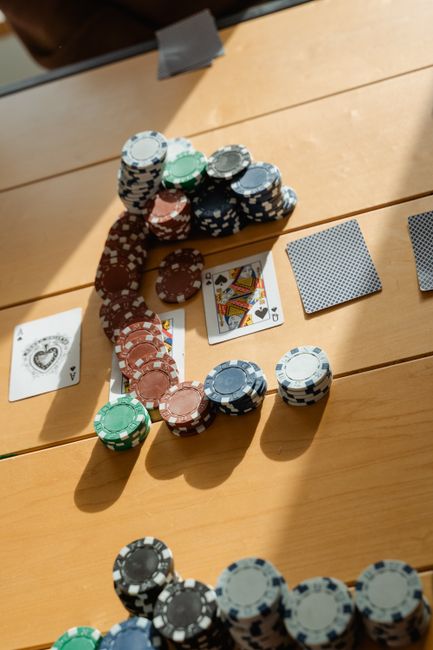
Every gambler remembers their first big win. Maybe it was a slot machine that paid out three figures on a lucky spin, or a parlay that hit after a last-second field goal. That rush is real, and it is precisely what the industry has spent billions refining. But here is the uncomfortable truth that separates the tourists from the veterans: the casino does not need to cheat you. The math already does the job, quietly and legally, one wager at a time.
Understanding that math is not about killing the fun. It is about playing longer, smarter, and with fewer illusions. Let us break down what is actually happening when you sit down at a table or open a slot, and how the sharpest players navigate it. If this is new to you, สล็อตเว็บตรง is a sensible next read.
The Margin Nobody Talks About at the Table
Every game offered in a casino carries a house edge, a built-in mathematical advantage expressed as a percentage of each bet the house expects to keep over time. It is not a fee you see at checkout; it is baked into the rules themselves. A wheel with one extra green pocket. A paytable that pays 35-to-1 on a 38-to-1 shot. These tiny structural choices are the difference between a fair bet and a profitable business.
Compare the common games:
- Blackjack: Roughly 0.5% to 2% with basic strategy, making it the best bet in most casinos.
- Baccarat: Around 1.06% on the banker bet, a favorite among high rollers for good reason.
- Craps: Pass line with full odds can drop below 1%, but the hardways will gut you at 9% to 11%.
- Roulette: Double-zero wheels sit at 5.26%; single-zero European wheels at 2.70%.
- Slots: Typically 2% to 10%, though some linked progressives stretch higher.
The lesson is not to avoid games with a higher edge. It is to know exactly what you are paying for the entertainment. If you play slots for three hours at $2 a spin with a 7% edge, you are effectively renting the experience for a predictable hourly cost. Go in with that mindset, and the swings stop feeling personal.
Variance Is Not Your Enemy, Ignorance Is
New players confuse expected value with short-term outcome. A game with a 1% house edge can still wipe your bankroll in twenty minutes. That is variance: the statistical spread of results around the average. Slots are high variance, blackjack is low, and poker sits somewhere in the middle depending on your style.
Here is the framework sharp players use:
- Define your session bankroll before you sit down, ideally 50 to 100 betting units.
- Set a stop-loss at half that bankroll and walk away without negotiating with yourself.
- Set a win goal you will actually honor, not a fantasy number.
- Track sessions in a simple notebook or app for at least a month before drawing conclusions.
Most losing streaks are not evidence of a rigged game. They are the normal expression of variance on a negative-expectation bet. The players who survive are the ones who plan for the worst sessions, not the best ones.
Slots: RNGs, RTP, and Why Streamers Mislead You
Modern slots run on random number generators that cycle thousands of outcomes per second. The result of your next spin has nothing to do with the last one, no matter how many near-misses you see. What matters is the return to player percentage, the theoretical payout over millions of spins, and the game's volatility.
Two slots with 96% RTP behave very differently if one is low volatility (frequent small wins) and the other high volatility (rare huge wins). Bonus buy features and megaways mechanics amplify this further. Streamers gambling with sponsored bankrolls on maximum bets are not a template for your $200 deposit. They are entertainment, often funded by affiliate deals, and their results are not reproducible.
Practical tips that actually help:
- Check the RTP in the game's info menu; anything below 95% is usually worse than the alternatives.
- Prefer games with clearly published volatility ratings; low volatility stretches your playtime.
- Set a loss limit in the casino's responsible gambling tools before you load a single credit.
- Ignore "hot" and "cold" machine mythology. It is a psychological trap, not a strategy.
Poker: The One Game Where You Can Actually Have an Edge
Poker is different because you are not playing the house; you are playing other people, minus a rake. That rake, typically 5% to 10% capped at a few dollars, is the only structural cost. Everything else is skill, psychology, and discipline. This is why professional players exist in poker and almost nowhere else in the casino.
If you want to improve, prioritize these:
- Position awareness. Play tighter from early seats, open wider on the button.
- Range thinking. Stop putting opponents on a single hand; think in distributions.
- Bankroll management. Never buy into a game with more than 5% of your dedicated poker roll.
- Study. Solvers and hand-review forums have made the average player tougher than a decade ago.
Online poker offers softer games at low stakes but demands volume and focus. Live poker is slower and more exploitative; many regulars there are recreational. Choose based on your temperament, not on hype.
Sports Betting: The Market Is Sharper Than You Think
Once seen as a pastime for the weekend punter, sports betting is now a market priced by algorithms that absorb news within seconds. Beating the closing line consistently is the benchmark of a genuine edge, and very few people manage it. If you are betting into a 4% to 5% margin on every market, you need a 55% hit rate on even-money plays just to break even.
That does not mean it is hopeless. Line shopping across multiple books, taking advantage of promotions, and focusing on niche markets where the book's pricing is weakest are legitimate strategies. What does not work: chasing losses with bigger bets, trusting tipsters on social media, or believing you have inside information when the market already moved.
The Bottom Line on Playing Smarter
The iGaming world is not rigged in the naive sense. It is simply optimized. Every game, bonus, and loyalty tier is designed around a mathematical edge that favors the operator over time. Your job is not to beat it through willpower; it is to understand it, choose your battles, and treat the money you spend as the price of entertainment rather than an investment you are owed a return on.
Players who last are the ones who respect variance, set hard limits, and abandon the fantasy of easy money. The house wins because the math says so, but you can still come out ahead in the only currency that really matters: fun per dollar spent. Get that ratio right, and you are already beating most of the crowd.


Zhon Andarson
Coding is used in almost all aspects of life and work now, be it directly or indirectly. It’s not just for companies in the tech sector. “An increasing number of businesses rely on computer code,
Andro Smith Doe
Coding is used in almost all aspects of life and work now, be it directly or indirectly. It’s not just for companies in the tech sector. “An increasing number of businesses rely on computer code,